
does laser change skin color? understanding laser vs camouflage tattooing
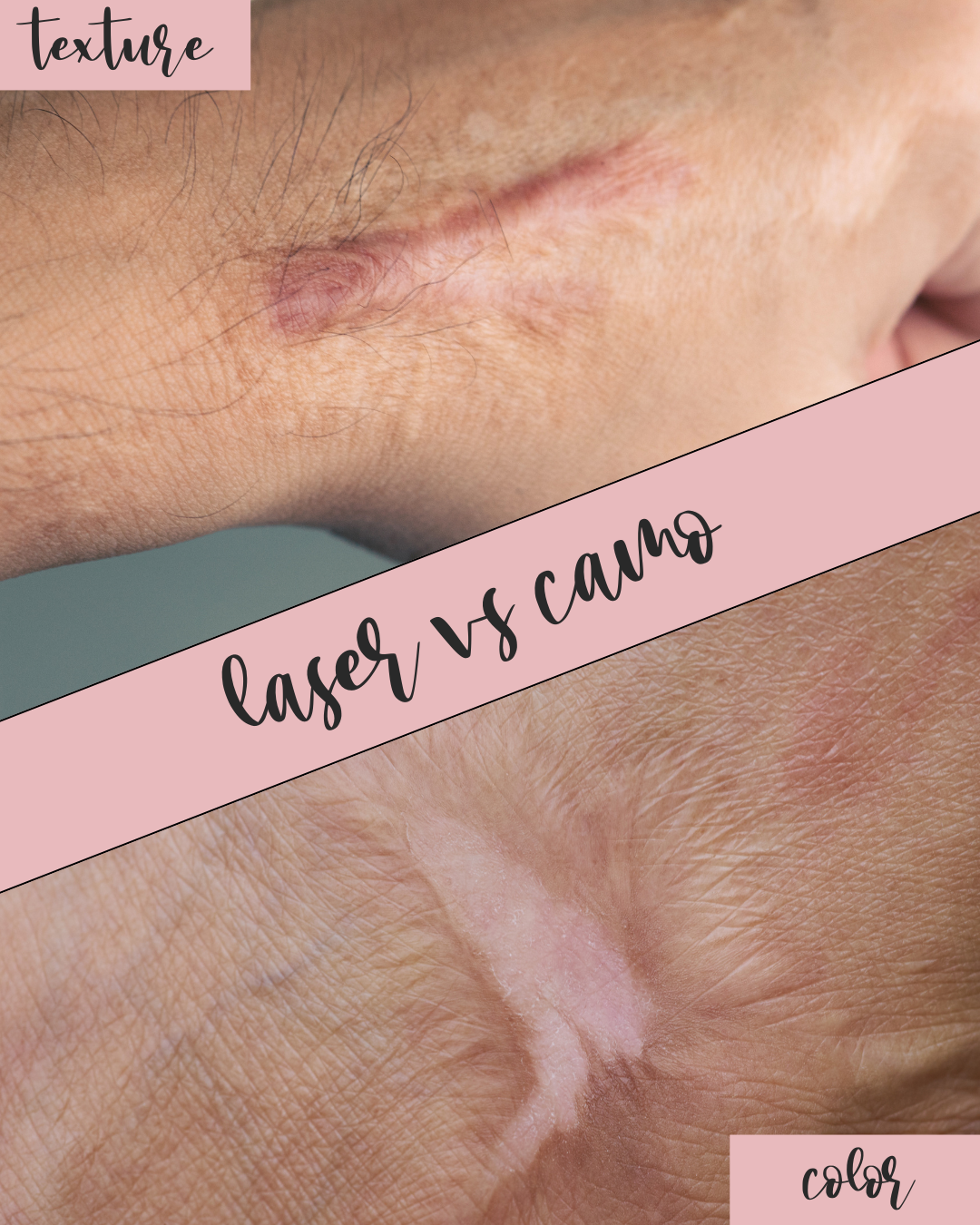
Many clients ask if laser treatments will fix discoloration in scars or stretch marks. The short answer is that laser can help the skin texture, but it does not change the color.
Understanding what laser does well and what it does not helps set realistic expectations and prevents frustration down the line.
what laser treatments actually help with
Laser treatments are designed to improve skin quality, not pigment matching.
Depending on the type of laser used, treatments may help with:
Uneven or rough texture
Raised or thickened scars
Tight or stiff scar tissue
Redness or vascular changes
Overall smoothness and skin pliability
When someone has a lot of texture, laser can soften raised areas, reduce thickness, and help the skin feel more flexible. This can make scars less noticeable from certain angles and improve how the skin reflects light.
Laser is especially helpful when scars feel bumpy, ropey or stiff to the touch.
what laser does not consistently change
Laser treatments do not reliably restore pigment in light or white areas of skin.
This includes:
Hypopigmented scars
White or silver stretch marks
Areas that lack melanin
Some clients may notice slight blending after laser, but these results are unpredictable and often the results are minimal or not noticeable. Many people complete multiple laser sessions and still have a visible color difference, even though the texture has improved.
This is why clients often say their skin feels smoother, but the color still looks off.
where people usually get laser treatments
Laser treatments are most commonly performed at:
Dermatology offices
Medical spas
Plastic surgery practices
The type of laser used depends on the provider and the concern being treated. Some lasers focus on resurfacing and texture, while others target redness or vascular issues. Even with advanced technology, laser outcomes for color restoration vary widely from person to person.
Laser providers typically focus on skin health and structure, not color or pigment matching.
is laser required before camouflage?
Laser is not required before camouflage treatment.
Laser may be helpful before camouflage if:
Texture is severe
Scars are raised or uneven
The skin feels stiff or thick
The client wants to improve texture first
Laser is often unnecessary if:
Texture is minimal
The primary concern is color contrast
The skin surface is already flat
The client is ready to move forward without additional procedures
Camouflage can be performed safely without prior laser as long as the skin is healed, stable, and mature.
important note about laser after camouflage
Once camouflage pigment has been placed, laser treatments should not be performed over the treated area.
Laser energy can break down or alter implanted pigment, which may cause unwanted color changes, distortion, or fading. For this reason, laser is always considered before camouflage, not after.
This does not mean laser is required. It simply means that if laser is part of someone’s plan, it should be completed prior to camouflage treatment.
After camouflage, the focus shifts to maintaining pigment stability rather than further resurfacing.
how laser and camouflage work together
Laser and camouflage serve different purposes and can complement each other when used appropriately.
Laser improves how the skin feels.
Camouflage improves how the skin looks by addressing color mismatch.
One does not replace the other. Each treatment has a specific role and realistic expectations matter.
choosing the right approach
If texture is your main concern, laser may be a helpful option.
If color difference is what draws your eye, camouflage is often the missing piece.
For some clients, combining both creates the most balanced result.
If you are unsure which option makes sense for your skin, education comes first.
At camoglam, consultations focus on understanding your goals, your skin, and what will realistically help. Whether you have tried laser before or are just starting to explore options, guidance matters.
You do not need to guess your way through the process. If you want help deciding what makes sense for your skin, you can schedule a consultation here.